
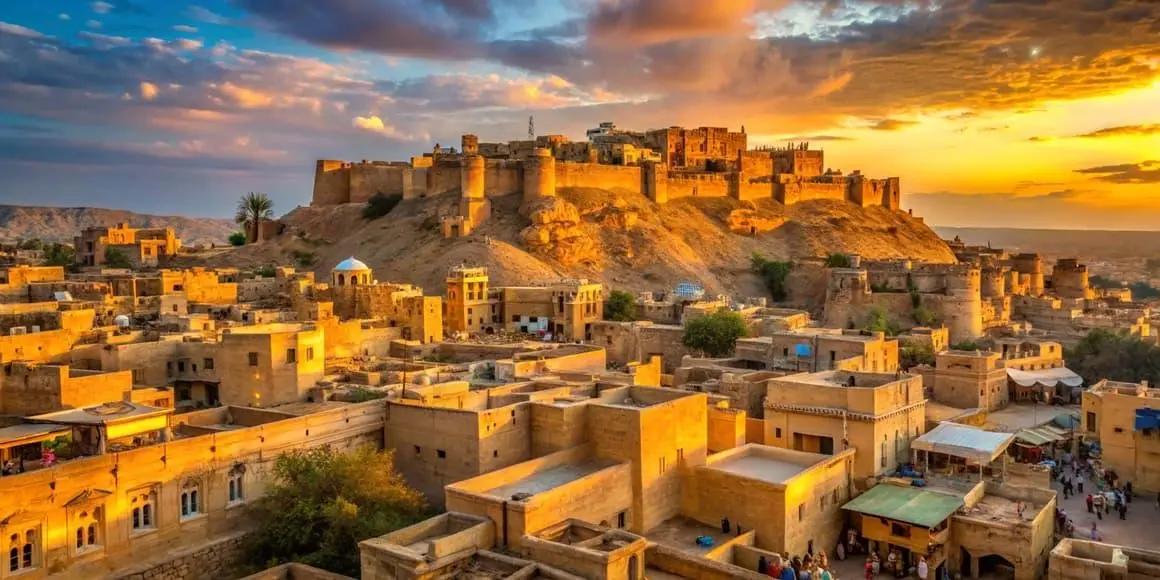
Jaisalmer is one of Rajasthan’s most distinctive destinations, where golden sandstone buildings rise from the edge of the Thar Desert and centuries-old architecture tells stories of merchants, rulers and desert life. From the remarkable Jaisalmer Fort to ornate havelis, peaceful heritage sites and sweeping sand dunes, the city offers much more than a quick photo stop.
If you’re deciding what to see, the best approach is to explore the historic city first and leave time for the desert beyond it. This guide covers the places worth prioritising, what makes each one special and how to fit them into your trip.
12 Best Places to Visit in Jaisalmer
If this is your first visit, start with Jaisalmer Fort, Patwon Ki Haveli and the old city. Add Gadisar Lake and Bada Bagh if you have more time, and reserve an afternoon or overnight stay for the desert.
1. Jaisalmer Fort — The Golden Heart of the City
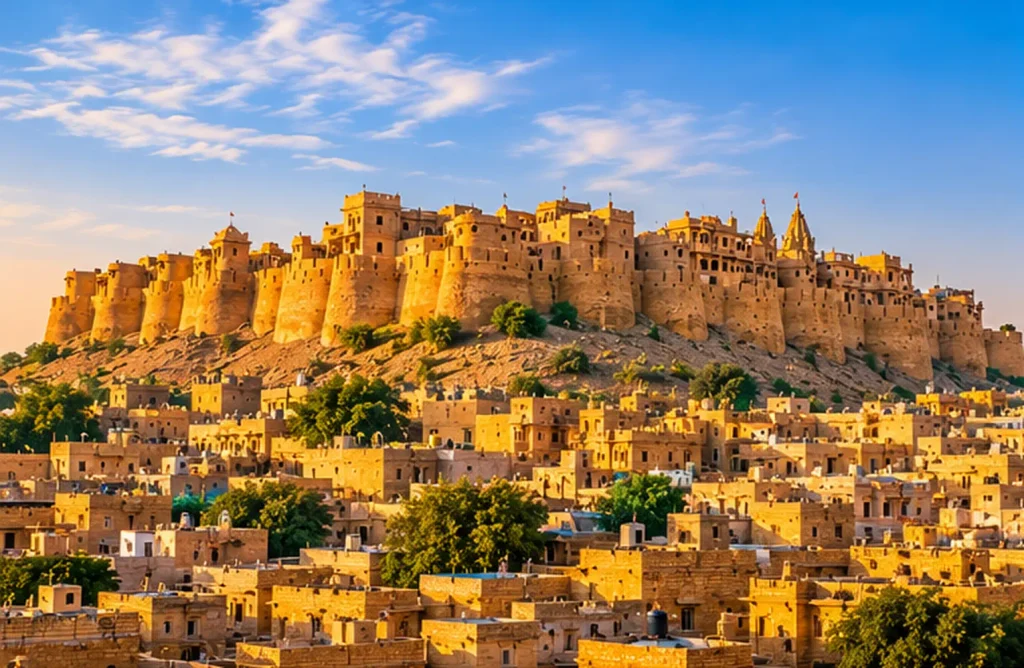
Jaisalmer Fort, also known as Sonar Qila or the Golden Fort, is the city’s defining landmark. Its yellow sandstone walls take on a warm golden colour in the sunlight, while narrow lanes wind between traditional homes, temples, shops and small eateries. For its history, key sights and visitor advice, see our complete Jaisalmer Fort guide.
Unlike many historic forts that operate mainly as monuments, Jaisalmer Fort remains a living neighbourhood. Exploring it is as much about observing everyday life as admiring the architecture.
What to see
- Walk through the historic lanes and gateways.
- Admire the sandstone facades and traditional architecture.
- Visit the fort’s Jain temples, subject to their opening hours and visitor rules.
- Browse local handicrafts and small shops.
- Find a viewpoint over the surrounding golden city.
Best time to visit: Early morning or late afternoon, when the light is attractive and walking is more comfortable.
Time to allow: Around 2–3 hours, longer if you explore the temples, museums and shops.
Travel tip: Wear comfortable footwear because the lanes can be steep, uneven and busy. Remember that people live and work inside the fort, so respect homes, religious spaces and private property.
2. Patwon Ki Haveli — Intricate Sandstone Craftsmanship
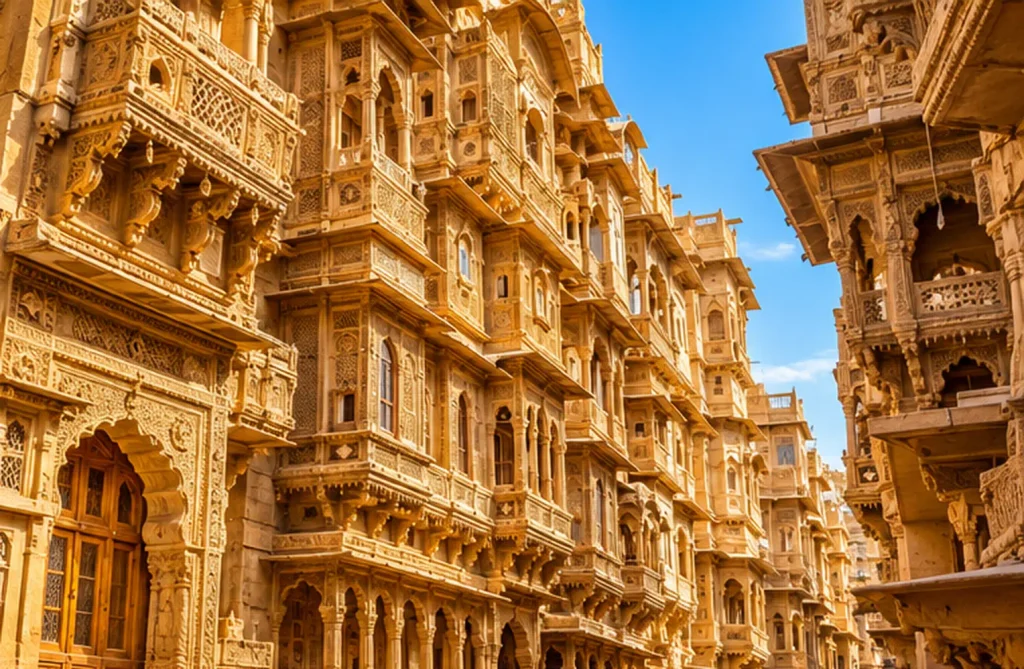
Patwon Ki Haveli is one of Jaisalmer’s most impressive architectural attractions. The complex comprises five interconnected havelis associated with a wealthy merchant family, with elaborate facades, carved balconies, arches and decorative details.
Look closely at the stonework rather than viewing the building only from a distance. The fine carvings and projecting jharokhas show the craftsmanship that made Jaisalmer’s historic architecture so distinctive.
Some sections contain museum displays that help visitors understand the region’s domestic life and decorative traditions.
Best for: Architecture lovers, history enthusiasts and photographers.
Best time to visit: Morning or late afternoon, when the sandstone details are easier to appreciate in softer light.
Time to allow: Approximately 45–90 minutes, depending on which sections are open.
Travel tip: Check current entry arrangements and opening hours before visiting. If you are interested in the interiors, allow more time than you would for an exterior photo stop.
3. Nathmal Ki Haveli — A Distinctive Historic Mansion
Nathmal Ki Haveli is known for its elaborate sandstone facade and distinctive architectural details. The two sides have subtle differences because the building was worked on from opposite ends by two architect brothers.
Look for the carved balconies, decorative windows and stone figures around the facade. These details make the haveli an interesting stop even if you have already visited Patwon Ki Haveli.
Best for: Architecture, photography and a short heritage walk.
Time to allow: Around 20–40 minutes for the exterior and surrounding lanes; longer if interior access is available.
Travel tip: Visit as part of a walking route through the old city rather than making a separate vehicle trip just for this building.
4. Salim Singh Ki Haveli — Curved Roofs and Carved Balconies
Salim Singh Ki Haveli stands out for its distinctive upper structure and ornate balconies. Its architectural details differ from those of the other famous havelis, making it a worthwhile addition to a heritage-focused itinerary.
Pay attention to the brackets, arches and projecting balconies. The building is particularly interesting when viewed alongside Nathmal Ki Haveli and Patwon Ki Haveli, as each illustrates a different expression of Jaisalmer’s sandstone craftsmanship.
Best for: Architecture enthusiasts and travellers exploring the old city.
Time to allow: Around 20–40 minutes, depending on access and how much time you spend photographing the exterior.
Travel tip: Combine all three major havelis with Jaisalmer Fort to reduce backtracking.
5. Jain Temples Inside Jaisalmer Fort
Within Jaisalmer Fort are historic Jain temples known for their detailed stone carvings, sculptural work and religious significance. They provide a quieter, more contemplative experience alongside the fort’s busy shopping lanes.
The interiors and decorative details reward visitors who take their time. If you enjoy historic religious architecture, make space for the temples rather than treating the fort as only a viewpoint.
Best for: Heritage, art and religious architecture.
Time to allow: Around 30–60 minutes, depending on which temples are accessible.
Travel tip: Check current opening times, dress respectfully and follow photography and footwear rules. Access may be restricted during worship or at particular times.
6. Gadisar Lake — A Peaceful Heritage Landmark
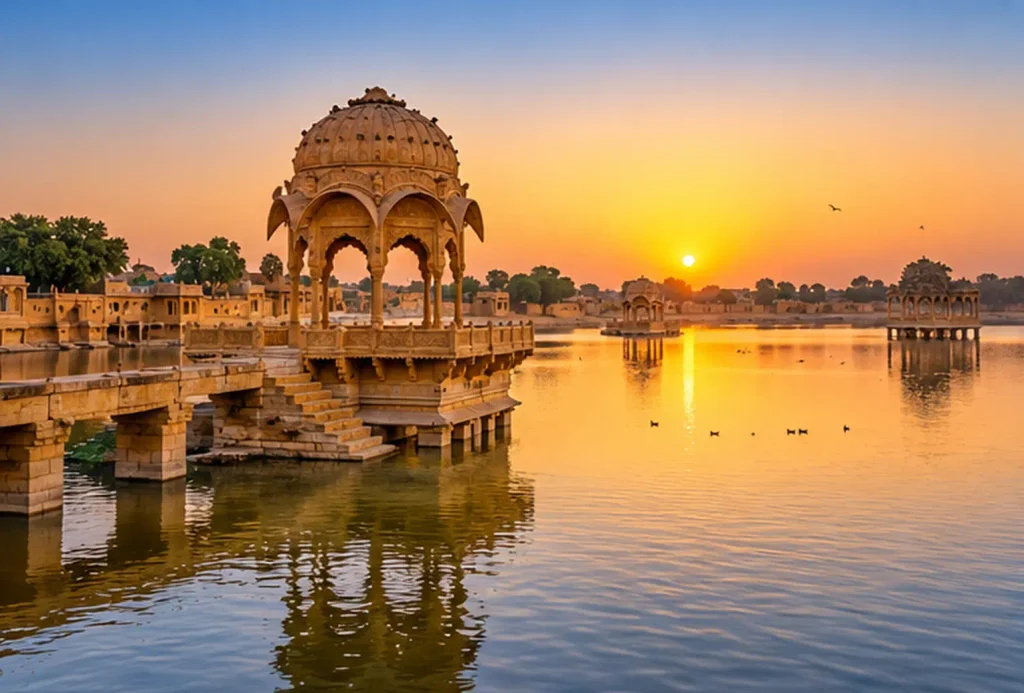
Gadisar Lake is a historic water reservoir surrounded by sandstone structures and gateways. It offers a different perspective on Jaisalmer, whose history is closely connected with the challenge of living in an arid desert environment. Read our Gadisar Lake visitor guide for more details.
The setting can be attractive for photography, particularly when the surrounding architecture catches the morning or evening light. Water levels and the overall appearance of the lake can vary with seasonal conditions, so don’t assume that boating or other activities will always be available.
Best for: Heritage, photography and a quieter break from sightseeing.
Best time to visit: Early morning or near sunset, depending on weather and current conditions.
Time to allow: Around 30–60 minutes.
Travel tip: Check local conditions before planning a boat ride. Even if water-based activities are unavailable, the surrounding architecture may still make the area worth visiting.
7. Bada Bagh — Royal Cenotaphs in the Desert Landscape
Bada Bagh is a historic memorial complex containing chhatris, or cenotaphs, associated with Jaisalmer’s royal rulers. The sandstone structures rise from an open landscape, creating a very different atmosphere from the narrow lanes of the old city.
The repeated architectural forms and the surrounding desert scenery make this a popular stop for photographers and travellers interested in royal history.
Best for: History, photography and sunset landscapes.
Best time to visit: Late afternoon, when the light can bring out the texture of the sandstone.
Time to allow: Around 45–60 minutes, plus travel time from the city.
Travel tip: Arrange transport in advance and check the current entry arrangements. Stay on permitted paths and avoid climbing on or damaging historic structures.
8. Sam Sand Dunes — Experience the Thar Desert
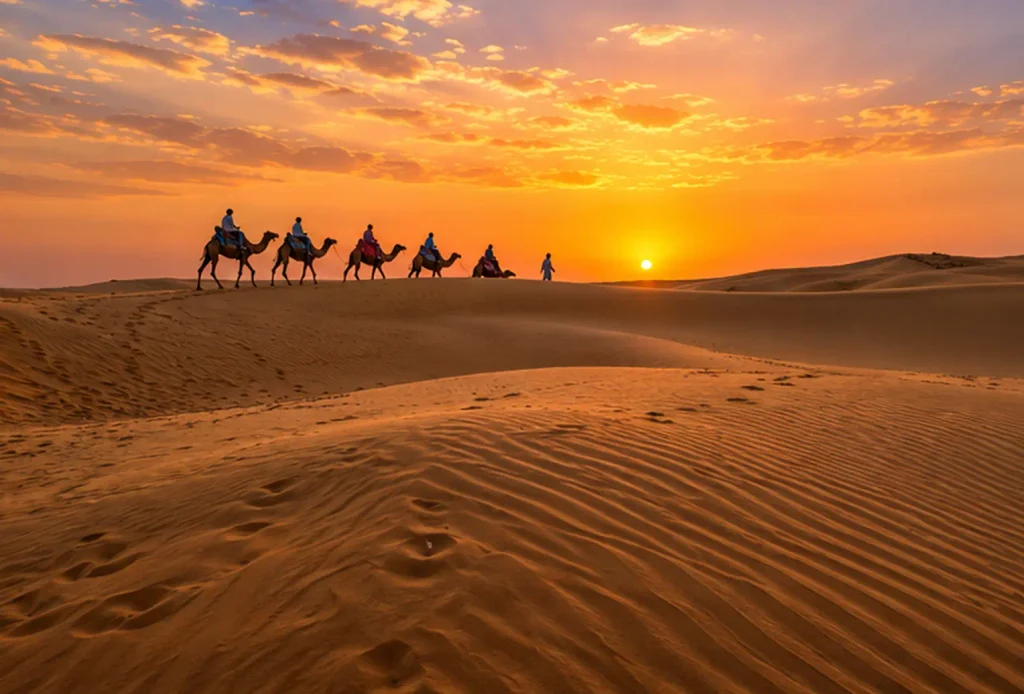
Sam Sand Dunes is one of the best-known desert destinations near Jaisalmer, roughly 40 kilometres from the city. The landscape offers a chance to experience the dunes beyond the architecture of the Golden City. Our Sam Sand Dunes visitor guide explains what to consider when planning a visit.
Visitors can choose from camel rides, jeep safaris, sunset outings and desert-camp experiences. Some camps also arrange Rajasthani folk music, dance performances and dinner. For a broader overview of desert activities and planning, see our Thar Desert travel guide.
The experience varies considerably by location and operator. Some areas can be busy during peak tourist periods, while a carefully chosen camp or excursion may provide a more relaxed desert evening.
Best for: First-time visitors, couples, families and travellers seeking a classic desert experience.
Best time to visit: Late afternoon for sunset, or overnight if you want to combine the dunes with a camp stay.
Time to allow: Half a day for a sunset excursion, or an overnight stay for the full camp experience.
Travel tip: Ask what is included in your booking, how far the camp is from the dunes, what transport is provided and whether cultural performances and meals are part of the package. Follow local guidance and avoid disturbing the desert environment.
9. Khuri Village — A Quieter Desert Alternative
Khuri is another option for travellers who want to experience the desert landscape and rural surroundings beyond the city. It is worth considering if you prefer to compare different desert areas rather than automatically choosing the busiest option.
Experiences depend on the accommodation and local operators available during your visit. Some visitors choose a simple village stay, while others arrange camel excursions or an overnight desert experience.
Best for: Travellers looking for a village atmosphere and a different desert setting.
Time to allow: Half a day or an overnight stay, depending on your plans.
Travel tip: Compare transport, accommodation, activities and the exact location before booking. Don’t assume every camp offers the same experience or that all facilities are located directly among the dunes.
10. Kuldhara — An Abandoned Village with a Long History
Kuldhara is an abandoned historic village outside Jaisalmer. Its remains and stories have made it one of the region’s best-known heritage excursions.
Local legends often describe the village’s abandonment in dramatic terms, but those stories should be understood as folklore rather than treated as fully established historical fact. The physical remains and the settlement’s place in local history are interesting in their own right.
Best for: History enthusiasts, curious travellers and those exploring beyond the main city attractions.
Best time to visit: Morning or late afternoon, avoiding the harshest heat.
Time to allow: Around 45–60 minutes on site, plus travel time.
Travel tip: Check current access arrangements and follow site rules. Do not enter restricted or unstable structures, and avoid removing stones or other material from the ruins.
11. Vyas Chhatri — A Scenic Heritage Stop
Vyas Chhatri is a group of sandstone cenotaphs on the outskirts of Jaisalmer, associated with memorial architecture and local traditions. Its elevated setting and carved structures make it an appealing stop for travellers interested in quieter historic sites.
It can work well alongside other excursions around the edge of the city, particularly if you enjoy photographing architectural details and open desert views.
Best for: Photography, heritage and a quieter sightseeing experience.
Best time to visit: Late afternoon, when the sandstone may take on warm tones.
Time to allow: Around 30–45 minutes.
Travel tip: Confirm current access and entry conditions before travelling. Be respectful of the site’s cultural and memorial significance.
12. Desert National Park — Discover the Thar’s Natural Side
Jaisalmer is not only about forts and dunes. The wider region also supports a distinctive desert ecosystem, including rocky terrain, sand dunes and wildlife adapted to arid conditions.
Desert National Park is particularly significant for birdlife and conservation, including the critically endangered Great Indian Bustard. Wildlife sightings are never guaranteed, and the experience is different from a commercial desert safari.
Best for: Nature enthusiasts, birdwatchers and travellers with additional time.
Best time to visit: Cooler months are generally more comfortable for outdoor exploration. Wildlife activity varies by season and conditions.
Time to allow: Plan a separate excursion and confirm the available visitor arrangements before setting out.
Travel tip: Use authorised access points and follow conservation guidance. Keep a respectful distance from wildlife and avoid disturbing birds or nesting areas.
Which Places Should You Prioritise?
You don’t need to visit all twelve places on a short trip. Choose according to your interests and available time.
- For first-time visitors: Jaisalmer Fort, Patwon Ki Haveli, Nathmal Ki Haveli and Sam Sand Dunes.
- For architecture lovers: Jaisalmer Fort, the Jain temples, Patwon Ki Haveli, Nathmal Ki Haveli and Salim Singh Ki Haveli.
- For photographers: The fort, Gadisar Lake, Bada Bagh, Vyas Chhatri and the desert at sunset.
- For history enthusiasts: Jaisalmer Fort, the havelis, Kuldhara and Bada Bagh.
- For nature and wildlife: Desert National Park and the wider Thar landscape.
- For a quieter desert experience: Compare Khuri with Sam before booking.
Suggested Sightseeing Plan
If You Have One Day
Focus on the historic city and one desert experience. For a timed route, see our one-day Jaisalmer itinerary.
- Morning: Explore Jaisalmer Fort and its Jain temples.
- Late morning: Visit Patwon Ki Haveli.
- Afternoon: See Nathmal Ki Haveli and Salim Singh Ki Haveli, allowing time for lunch and breaks.
- Late afternoon and evening: Travel to Sam Sand Dunes for a sunset experience.
This is a full day. If you prefer a slower pace, skip one or two city stops rather than rushing through every attraction.
If You Have Two Days
Day 1: Historic Jaisalmer
Explore the fort, Jain temples and the principal havelis. Visit Gadisar Lake if time and local conditions permit. You can use our two-day Jaisalmer itinerary to plan the pace.
Day 2: Heritage and desert
Visit Bada Bagh or Kuldhara in the morning, then spend the late afternoon at Sam Sand Dunes. Consider an overnight camp if it fits your budget and travel style.
If You Have Three Days
Use the first two days for the main city and desert sights, then choose an additional excursion such as Khuri, Vyas Chhatri or Desert National Park. This gives you more flexibility and reduces the pressure to fit everything into one schedule. For a fuller route, see our three-day Jaisalmer itinerary.
Practical Tips for Sightseeing in Jaisalmer
- Plan around the weather: Walking through the old city is generally more comfortable during cooler parts of the day. Summer heat can be intense. Check our guide to the best time to visit Jaisalmer when choosing your travel dates.
- Wear suitable footwear: Historic lanes and fort paths may be uneven or steep.
- Carry water: Keep hydrated during outdoor sightseeing, especially when visiting sites beyond the city.
- Check timings and entry rules: Opening hours, ticket arrangements, photography rules and access can change.
- Arrange transport for outlying sites: Bada Bagh, Kuldhara, Sam and other excursions require more planning than attractions within the old city.
- Respect residents and religious spaces: The fort is a living neighbourhood, not simply an open-air museum.
- Compare desert experiences carefully: Check the exact location, transport, inclusions and environmental practices before booking a safari or camp.
- Leave room for unexpected discoveries: Small lanes, carved doorways, local shops and views can become highlights of a visit.
Frequently Asked Questions
What is the most famous place to visit in Jaisalmer?
Jaisalmer Fort, also called Sonar Qila or the Golden Fort, is the city’s most recognisable landmark. It combines historic architecture with an active neighbourhood of residents, shops and religious sites.
How many days are enough for Jaisalmer sightseeing?
Two days are a useful starting point for the principal city attractions and a desert excursion. Three days provide more time for outlying heritage sites, a slower pace or an overnight desert stay.
Is Sam Sand Dunes worth visiting?
Sam is a popular choice for a desert safari and sunset experience. Whether it is right for you depends on the atmosphere you prefer, the activities you want and the type of camp or excursion you select.
Are Gadisar Lake and Bada Bagh worth visiting?
Both can add variety to a trip. Gadisar Lake offers a historic water-reservoir setting, while Bada Bagh is known for its royal cenotaphs and open landscape. Check current access and local conditions before visiting.
Can I explore Jaisalmer Fort on foot?
Yes, walking is one of the best ways to explore the fort’s lanes and architecture. Wear comfortable shoes, allow time for uneven paths and be mindful of residents and places of worship.
Which places can I skip if I have limited time?
Prioritise Jaisalmer Fort, one or two major havelis and your preferred desert experience. Outlying sites such as Kuldhara, Bada Bagh and Desert National Park can be saved for a longer stay or a return trip.
Plan Your Jaisalmer Visit
The best places to visit in Jaisalmer reveal different sides of the Golden City: its living fort, merchant-era architecture, historic water systems, royal memorials and the vast desert landscape beyond the city. If you want more ideas beyond these landmarks, explore our guide to the best things to do in Jaisalmer.
Start with the fort and havelis, choose the heritage stops that interest you most, and leave time to experience the Thar Desert. With a little planning, even a short visit can offer a memorable introduction to Jaisalmer.
For a broader overview of transport, accommodation, seasons and trip planning, read our Complete Jaisalmer Travel Guide.