
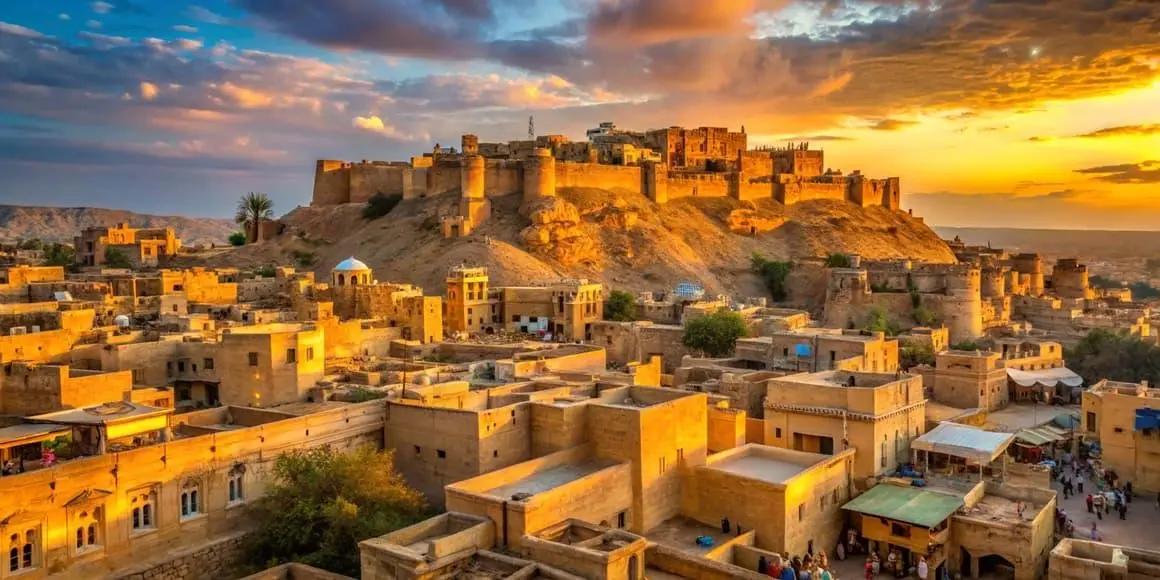
Jaisalmer Fort is one of Rajasthan’s most remarkable landmarks, rising above the Golden City with massive sandstone walls, narrow lanes, carved havelis and centuries of living history. Known as Sonar Qila or the Golden Fort, it is unlike a monument that you simply enter, photograph and leave behind. It is also a living neighbourhood where people work, worship, shop and go about their daily lives.
Whether you’re visiting Jaisalmer for a weekend or exploring Rajasthan on a longer trip, the fort deserves a place near the top of your itinerary. This guide covers its history, the main attractions inside, the best time to explore and practical tips to help you make the most of your visit.
Jaisalmer Fort at a Glance
- Also known as: Sonar Qila or Golden Fort
- Location: Jaisalmer, Rajasthan, India
- Built: Traditionally dated to 1156 CE
- Founder: Rawal Jaisal, a Bhati Rajput ruler
- Known for: Golden sandstone architecture, historic lanes, temples and its living community
- UNESCO status: Part of the Hill Forts of Rajasthan World Heritage property
- Ideal visit duration: Around 2–4 hours for a general exploration, with more time if visiting museums and temples
Allow extra time if you enjoy architecture, photography or browsing the small shops and heritage streets. Temple and museum visits may have separate access arrangements.
The History of Jaisalmer Fort
Jaisalmer Fort was established in 1156 CE by Rawal Jaisal, a ruler of the Bhati Rajput dynasty. Its position on Trikuta Hill gave the settlement a commanding view over the surrounding desert landscape and helped make it an important centre along historic trade routes.
Over the centuries, Jaisalmer grew through commerce, regional politics and its connections with travellers and merchants crossing the desert. The fort became a centre of royal authority, trade, worship and residential life. Its architecture reflects this long history, from defensive walls and gateways to merchant homes, palaces and religious buildings.
The fort’s yellow sandstone is responsible for its famous golden appearance. Depending on the time of day, the stone shifts from pale yellow to rich amber and deep gold. This changing colour is one reason the fort is especially striking in the early morning and late afternoon.
Today, Jaisalmer Fort is recognised as part of the UNESCO-listed Hill Forts of Rajasthan. Its importance lies not only in its fortifications but also in the historic urban life that continues within its walls.
Why Is Jaisalmer Fort Called a Living Fort?
Many historic forts in India survive primarily as monuments or museums. Jaisalmer Fort is different because it continues to function as a neighbourhood.
Within the fort, you’ll find homes, shops, small businesses, places of worship, cafés and accommodation. Residents use the same lanes that visitors explore, and daily life unfolds alongside heritage architecture.
This living character makes the experience special. You can admire carved doorways, watch shopkeepers open their businesses and discover quiet corners away from the busiest streets.
It also means visitors should explore thoughtfully. Keep noise down in residential areas, ask before photographing people or private spaces, avoid blocking narrow lanes and respect religious customs.
Best Things to See Inside Jaisalmer Fort
1. The Fort Gates and Defensive Walls
Begin by noticing the fort’s imposing walls, bastions and gateways. These defensive structures reveal how the settlement was protected and how people entered the fortified city.
As you approach and move through the entrance area, look at the changing levels of the hill and the relationship between the walls and the dense historic neighbourhood below. The fort is as much an urban landscape as it is a military structure.
Take photographs from suitable public viewpoints, but avoid stopping in busy passages where people need to move through.
2. The Historic Streets and Lanes
Some of the most memorable discoveries inside Jaisalmer Fort happen between the major attractions.
Wander through the narrow streets to see sandstone homes, traditional balconies, carved windows, small shrines and shopfronts. Look up at the intricate details around doorways and upper-storey façades; many are easy to miss when you focus only on street level.
The lanes can be confusing, so keep your map handy and allow yourself time to explore without rushing. If you prefer learning about the fort’s history as you walk, consider a knowledgeable local guide.
3. Raj Mahal and the Palace Museum
The former royal palace is one of the fort’s important heritage attractions. Its architecture offers a glimpse into the royal history of Jaisalmer and the craftsmanship associated with the region.
Museum access, exhibits, ticket arrangements and visiting hours can differ from access to the surrounding streets. Check the latest information locally before planning your visit around the palace.
If royal architecture and history interest you, leave enough time to explore rather than treating the palace as a quick photo stop.
4. The Jain Temples
The Jain temples inside Jaisalmer Fort are among its most significant religious and architectural attractions. The complex includes beautifully detailed stonework, sculptural figures, decorative pillars and intricate carvings.
Take time to observe the craftsmanship rather than simply walking through. The fine details can be particularly impressive when viewed up close.
These are active places of worship, so dress respectfully, follow any footwear and photography rules, and observe instructions from temple staff. Access may be subject to religious schedules or other restrictions, so check current arrangements before visiting.
5. The Carved Havelis and Traditional Architecture
Jaisalmer’s historic homes are celebrated for their yellow sandstone façades, balconies, jharokhas and elaborate stone carving.
As you walk through the fort, compare the designs of different buildings. Notice the patterns around windows and doors, the use of shaded balconies and the decorative details that distinguish one façade from another.
Remember that not every historic-looking building is open to visitors. Some are private homes or working businesses, so admire them from public areas unless access is clearly permitted.
6. Local Shops and Handicrafts
The fort’s lanes contain shops selling souvenirs, textiles, handicrafts, jewellery and other locally made goods.
Browsing is a good way to experience the everyday character of the fort. If you intend to buy something, take your time comparing quality and prices, and ask questions about materials or craftsmanship.
Shopping is optional, however. You can enjoy the architecture and atmosphere without making purchases.
7. Cafés and Rooftop Views
Some cafés and restaurants around the fort and old city offer views across the sandstone rooftops and surrounding landscape. A rooftop stop can be a pleasant break after walking through the lanes.
Views vary by location, and not every rooftop faces the fort’s most dramatic side. Choose a place with a safe, permitted viewpoint, and be considerate of nearby residents.
For photography, late afternoon often provides warm light on the sandstone. Sunset is popular, so expect other visitors at well-known viewpoints.
Best Time to Visit Jaisalmer Fort
The cooler months are generally the most comfortable for exploring Jaisalmer on foot.
October to March: These months are usually preferable for sightseeing, with winter often offering comfortable conditions for longer walks. December and January can have chilly mornings and evenings, so carry a light layer.
April to June: Temperatures can become extremely hot. If you visit during this period, plan outdoor exploration early in the morning or later in the day, carry water and take breaks in shaded places.
July to September: Conditions can be variable, with heat, humidity and occasional rain. Check the forecast and local conditions before setting out.
For photography, early morning offers a quieter atmosphere, while late afternoon can bring a warm golden glow to the sandstone. The best time also depends on your priorities: avoiding crowds, exploring temples, shopping or taking photographs.
How Much Time Do You Need?
The right amount of time depends on how deeply you want to explore.
- About 1 hour: Walk through part of the fort, see the main lanes and take in the architecture. This will be a quick introduction rather than a complete visit.
- 2–4 hours: A useful starting point for exploring the main streets, seeing the architecture and visiting selected attractions.
- Half a day: Best if you want a more relaxed walk, time for religious and heritage sites where accessible, a meal or café stop and some shopping.
If the fort is your main interest, don’t squeeze everything into a short stop between other attractions. Its character becomes clearer when you allow time to notice the details.
A Simple Walking Plan for Jaisalmer Fort
You can use this flexible sequence to organise your visit:
- Start near the main entrance: Take in the fort walls and gateways before entering the historic lanes.
- Explore the central streets: Notice the sandstone buildings, carved façades and daily life inside the fort.
- Visit the palace or museum: Check current access and opening arrangements first.
- Explore the Jain temples: Visit respectfully and follow any restrictions.
- Pause for a drink or meal: Choose a suitable café or restaurant if you need a break.
- Finish with architecture and views: Use the remaining time to explore quieter public lanes or a permitted viewpoint.
This is a suggested sequence, not a fixed route. Some attractions may be closed or have restricted access on the day of your visit.
Practical Tips for Visiting Jaisalmer Fort
Wear comfortable footwear. Expect walking on uneven surfaces, stone paths and narrow lanes. Comfortable shoes will make the visit easier.
Carry drinking water. The desert climate can be dry, and walking in the sun can become tiring. Refill or purchase water responsibly and avoid leaving plastic waste behind.
Check attraction timings. The fort’s public streets and individual attractions do not necessarily follow the same schedule. Confirm the latest timings, entry fees and any restrictions for the palace museum and temples.
Respect residents. People live and work inside the fort. Avoid entering private spaces, blocking doorways or photographing people without permission.
Be careful with photography. Follow all signs and instructions, particularly inside temples and museums.
Consider a local guide. A good guide can explain the history, architecture and local traditions that might otherwise be easy to overlook. Agree on the scope and price of a tour before starting.
Avoid rushing in the midday heat. If visiting during warmer months, plan your walking for cooler hours and take regular breaks.
Help protect the heritage site. Use bins, avoid damaging walls or carvings and be mindful of the fort’s conservation needs. Its long-term future depends on caring for both its historic buildings and the community that lives there.
How to Reach Jaisalmer Fort
Jaisalmer Fort is in the historic centre of Jaisalmer and is accessible from many parts of the city.
- From Jaisalmer railway station: You can take a taxi or auto-rickshaw towards the old city and the fort entrance.
- From the bus stand: Local transport and taxis can take you towards the fort area.
- From hotels in the old city: Depending on where you’re staying, the fort may be reachable on foot.
- From hotels outside the centre: A taxi or auto-rickshaw is usually a convenient option.
The final approach involves walking through the historic area, and some lanes are narrow or busy. Ask your accommodation about the most convenient drop-off point and any local access restrictions.
Is Jaisalmer Fort Worth Visiting?
Absolutely. Jaisalmer Fort brings together history, architecture, religious heritage and everyday local life in one remarkable setting. Its golden sandstone walls are impressive, but the real experience lies in exploring the streets, noticing the intricate carvings and understanding that this is still a living community.
Whether you spend an hour exploring the main lanes or devote half a day to the fort and its attractions, it is one of the essential experiences of a Jaisalmer trip.
For more ideas, read our Complete Jaisalmer Travel Guide and our guide to the Best Places to Visit in Jaisalmer. Together, these guides will help you plan a visit that combines the fort with the city’s havelis, lakes and desert experiences.
Frequently Asked Questions
What is Jaisalmer Fort famous for?
Jaisalmer Fort is famous for its golden sandstone architecture, historic streets, royal palace, Jain temples and living community. It is also known as Sonar Qila or the Golden Fort.
Who built Jaisalmer Fort?
Jaisalmer Fort was established by Rawal Jaisal in 1156 CE, according to the commonly cited historical date.
Is Jaisalmer Fort a living fort?
Yes. Residents continue to live and work inside the fort, alongside shops, places of worship and other local businesses.
How long does it take to visit Jaisalmer Fort?
Allow around 2–4 hours for a general exploration. A shorter visit can cover the main lanes, while a half-day visit gives you more time for heritage attractions, temples and breaks.
Is there an entry fee for Jaisalmer Fort?
Access arrangements can differ between the fort’s streets and individual attractions such as the palace museum or temples. Check current local information before your visit rather than relying on an old fee listing.
What is the best time of day to visit?
Early morning is useful for a quieter walk, while late afternoon offers warm light for photography. In hot weather, avoid extended walks during the hottest part of the day.
Can I visit Jaisalmer Fort and the havelis on the same day?
Yes. You can combine the fort with nearby historic havelis in a day, provided you allow enough time for walking and check the access arrangements for individual attractions.
Is a guide necessary?
A guide is not essential for everyone, but a knowledgeable local guide can add valuable context about the fort’s history, architecture and living traditions.
Is Jaisalmer Fort suitable for families?
Families can enjoy its history, architecture and lively lanes. However, expect uneven paths, steps and crowded passages in some areas. Keep children close in busy lanes and plan breaks as needed.