
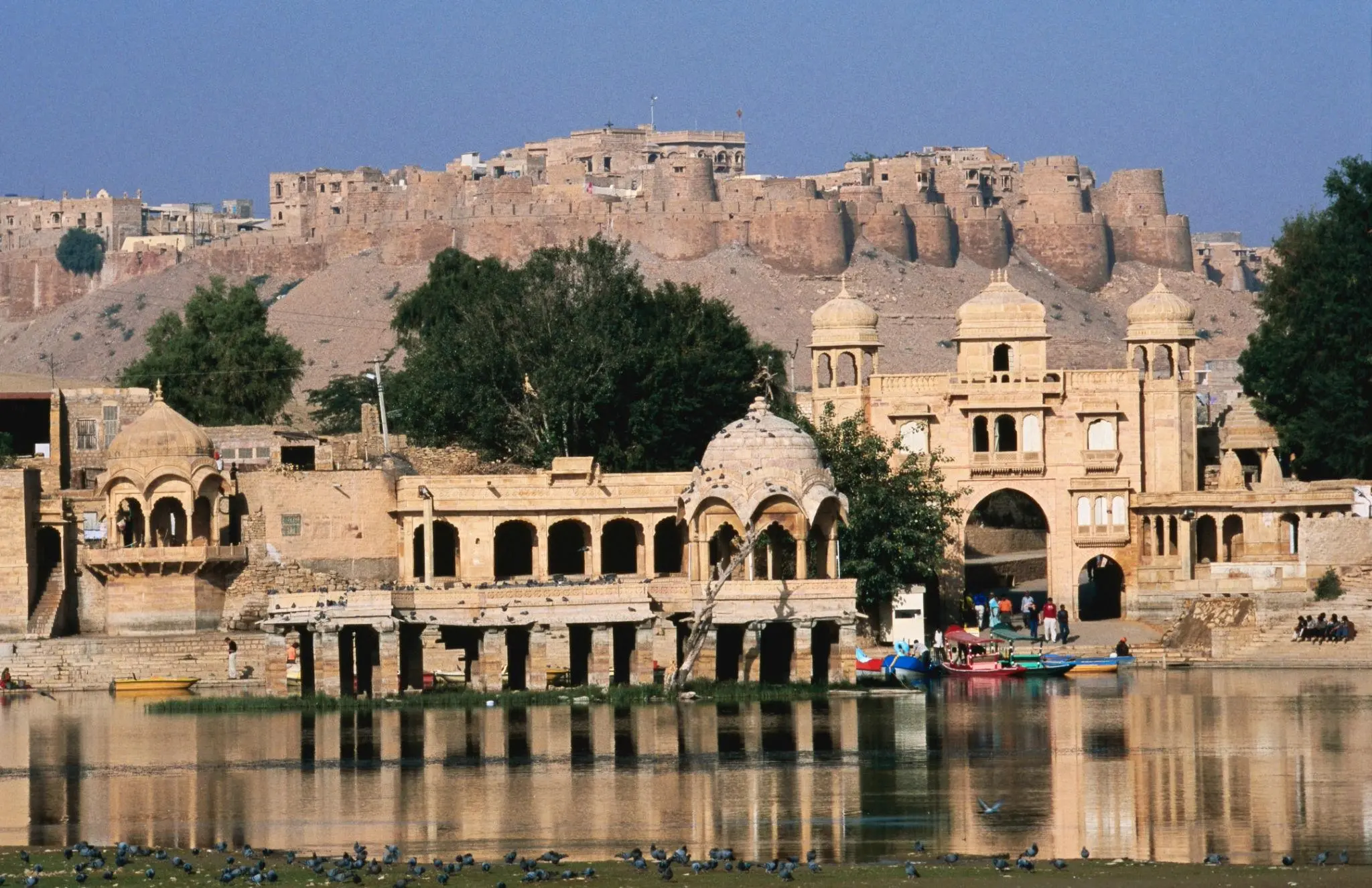
Gadisar Lake is one of Jaisalmer’s distinctive historic landmarks. Alongside its famous golden fort, intricately carved havelis and desert landscapes, this reservoir offers visitors a glimpse into how people managed water in Rajasthan’s arid climate.
Close to Jaisalmer’s historic centre, the lake reflects an important part of the city’s past. In a region where water has always been precious, reservoirs helped sustain settlements through dry periods. Sandstone gateways, pavilions, shrines and steps around Gadisar Lake also make it interesting for visitors who enjoy history, architecture and photography.
A visit to Gadisar Lake offers a different perspective on the Golden City. Instead of narrow fort lanes or open dunes, you can explore historic stonework, enjoy views of the surrounding landscape and learn about the ingenuity that helped a desert city thrive.
Water levels and visitor activities can change with rainfall and local water management. Check current local information before travelling, especially if you hope to go boating or see the lake at a particular water level.
Gadisar Lake at a Glance
- Location: Jaisalmer, Rajasthan, near the historic city
- Type: Historic rainwater reservoir
- Historical significance: Helped meet the water needs of Jaisalmer
- Known for: Tilon Ki Pol, sandstone architecture, pavilions and scenic views
- Suggested visit duration: Around 30–60 minutes, depending on access and conditions
- Best time for comfortable sightseeing: Generally the cooler months, with early morning or late afternoon often pleasant
- Important: Water levels, access and boating availability can vary
Gadisar Lake is worth considering for travellers interested in the heritage and everyday history of Jaisalmer. You can appreciate its architecture even if you do not plan to take a boat ride.
The History of Gadisar Lake
A reservoir built for a desert city
Water conservation has long been essential in Jaisalmer’s arid environment. Before modern water infrastructure, reservoirs and other traditional water systems played a vital role in supporting settlements.
Gadisar Lake is associated with Maharawal Gadsi Singh and is commonly dated to the 14th century, although accounts of the site’s earlier origins vary. It served as an important water source for the city and illustrates how communities adapted to the challenges of living in a dry region.
The reservoir’s historical importance extends beyond its practical purpose. Over time, the structures around it helped turn the area into a place of architectural and cultural interest.
Architecture around the water
The lake is associated with carved sandstone structures, steps, shrines and chhatris—domed pavilions that are a familiar feature of Rajasthani architecture.
These structures frame the reservoir and provide a glimpse into the craftsmanship that appears throughout Jaisalmer. The stonework, arches and decorative details are especially interesting for visitors who enjoy heritage photography.
The setting also offers a contrast with the surrounding desert landscape: a historic water body framed by architecture created to endure in a challenging climate.
Tilon Ki Pol: The Historic Gateway
One of the most recognisable features associated with Gadisar Lake is Tilon Ki Pol, an ornate sandstone gateway near the entrance.
The carved gateway makes a strong first impression, with its traditional architectural details and connection to the historic lake precinct. It is a natural starting point for exploring the area.
Local stories connect the gateway with a woman named Tilon. Versions of the story differ, so it is best treated as local legend rather than a fully verified historical account.
When visiting, take time to appreciate the stonework and surrounding structures instead of treating the gateway simply as a photo stop. Be considerate of other visitors and avoid blocking access while taking photographs.
Best Things to See and Do at Gadisar Lake
1. Explore the historic gateway
Start at Tilon Ki Pol and examine its carved details. The gateway introduces the architectural character of the lake area and provides an interesting subject for photographs.
If you are interested in heritage, look closely at the stone carving and how the entrance relates to the wider setting.
2. Walk around the accessible lakefront
Where access permits, a walk along the lakefront can offer views of the sandstone structures, steps and surrounding landscape.
The experience depends on current water levels and which areas are open. Some sections may be less scenic when the water recedes, and exposed lakebed can change how the surroundings look.
Wear comfortable footwear and follow any local instructions about restricted or unsafe areas.
3. Appreciate the sandstone pavilions and shrines
The structures around Gadisar Lake are part of what makes the site distinctive. Chhatris, small shrines and other historic features create a setting that rewards a slower visit.
Look for architectural details and the relationship between the stone structures and the reservoir. Respect places of worship and any posted photography restrictions.
4. Photograph the heritage architecture
Gadisar Lake can be a rewarding photography stop because it combines carved sandstone, traditional architecture and open views.
Early morning and late afternoon often provide softer light than the middle of the day. However, the best composition depends on the current condition of the lake, the weather and which structures are accessible.
Do not assume that photographs showing a full lake or boats accurately represent present-day conditions.
5. Learn about traditional water conservation
Perhaps the most meaningful way to experience Gadisar Lake is to understand why it exists.
A reservoir in a dry region was not merely a scenic attraction. It was part of the infrastructure that helped a community survive. The lake provides an opportunity to reflect on traditional water management and the continuing importance of conserving water in arid environments.
This historical perspective makes the site worthwhile even for visitors who are not particularly interested in boating.
6. Check whether boating is operating
Boating has traditionally been one of Gadisar Lake’s visitor activities. However, it depends on the lake’s water level, operating conditions and local arrangements.
Boating availability and the lake’s appearance can vary with water levels and local operating decisions. Do not plan your visit around a boat ride without checking for a current update.
If boating is unavailable, you can still explore the accessible heritage areas and learn about the reservoir’s history, subject to local access conditions.
Best Time to Visit Gadisar Lake
October to March
The cooler months are generally more comfortable for exploring Jaisalmer’s outdoor attractions. Early mornings and late afternoons can be pleasant for walking and photography.
Winter is also a popular tourism period across the city, so the surrounding attractions may be busier.
Seasonal comfort does not guarantee a full lake. Rainfall and water-management conditions can affect Gadisar Lake independently of the tourist season.
April to June
Summer can be extremely hot in Jaisalmer. If you visit during this period, avoid prolonged exposure during the hottest part of the day and carry drinking water, sun protection and suitable clothing.
Check the lake’s condition before making a special trip, particularly if you expect to see reflections or enjoy a waterside experience.
July to September
Monsoon rainfall can affect the appearance and water level of the reservoir. Conditions vary from year to year, so a visit may look very different depending on the amount of rainfall and local water management.
Check current conditions close to your travel date rather than relying only on seasonal expectations.
How Much Time Should You Spend at Gadisar Lake?
The time you need depends on your interests and the areas open to visitors.
- 15–30 minutes: A short stop to see the gateway and nearby architecture, if access allows.
- 30–60 minutes: A more relaxed visit with time for photographs and a walk around accessible sections.
- Longer visit: If boating is operating, you are exploring the surrounding heritage structures in detail, or you want to spend more time photographing the area.
You do not need to reserve half a day for the lake alone. It can fit naturally into a wider Jaisalmer sightseeing itinerary.
How to Reach Gadisar Lake
Gadisar Lake is located within the Jaisalmer urban area, making it easier to combine with the city’s other attractions than a trip to the more distant desert dunes.
By taxi or auto-rickshaw
A local taxi or auto-rickshaw can take you to the lake area. Confirm the drop-off point and return arrangements, particularly if you are visiting early in the morning or later in the evening.
By private car
If you are travelling by car, check the available parking and access arrangements before setting out. Follow local traffic restrictions and avoid assuming that every lane near the historic structures is suitable for vehicles.
As part of a sightseeing route
Gadisar Lake can be included in a day of sightseeing around Jaisalmer. You could combine it with the fort, havelis and other nearby attractions, depending on your schedule and the order that makes sense for your transport.
For the best route, consider the time of day, walking distance and current access conditions rather than trying to visit every attraction in a single rush.
Practical Tips Before Visiting
A few checks can help you avoid disappointment:
- Check current water levels. Conditions may differ considerably from older travel photographs.
- Confirm boating availability. Do not assume boats are operating simply because older guides list them as an attraction.
- Check local access. Some sections may be closed or unsuitable depending on conditions.
- Choose comfortable footwear. You may walk along steps or uneven surfaces.
- Carry water and sun protection. The area can be exposed to strong sunlight.
- Respect religious spaces. Be considerate around shrines and places of worship.
- Keep the area clean. Dispose of rubbish properly and avoid polluting the reservoir.
- Allow time for photographs. The architecture and details deserve more than a hurried stop.
Opening arrangements, access and any activity charges should be verified locally because they can change.
Is Gadisar Lake Worth Visiting?
Gadisar Lake is worth considering if you want to understand Jaisalmer beyond its fort and desert excursions. Its history as a water reservoir reveals the practical ingenuity required to sustain a settlement in a dry environment, while the surrounding architecture provides a different perspective on the city’s heritage.
It is important, however, to have realistic expectations. The lake’s appearance and activities depend on rainfall, water management and current access arrangements. Check the latest local conditions before travelling specifically to see a full lake or take a boat ride.
If you enjoy history, architecture and photography, the accessible heritage features may still make the visit worthwhile. Approach the site as a historic water system as well as a tourist attraction.
Frequently Asked Questions
Why is Gadisar Lake famous?
Gadisar Lake is known for its historical role as a water reservoir for Jaisalmer, along with its carved gateway, sandstone architecture, pavilions and scenic setting.
Who built Gadisar Lake?
The lake is commonly associated with Maharawal Gadsi Singh and is generally dated to the 14th century. Some accounts refer to earlier origins, so historical descriptions may vary.
What is Tilon Ki Pol?
Tilon Ki Pol is an ornate sandstone gateway associated with the entrance to the lake precinct. Local stories connect its construction with a woman named Tilon, although versions of the story differ.
Is boating available at Gadisar Lake?
Boating has traditionally been offered, but availability depends on water levels and local operating conditions. Check the latest local update before planning a boat ride, as older travel guides and photographs may not reflect current conditions.
What is the best time of day to visit?
Early morning and late afternoon can be comfortable times for sightseeing and photography. Your experience will also depend on weather, crowds and current lake conditions.
How long does a visit take?
A short stop may take 15–30 minutes, while a relaxed visit can take around 30–60 minutes or longer if you explore the accessible heritage features in detail.
Can Gadisar Lake be combined with Jaisalmer Fort?
Yes. Both can be included in a city sightseeing plan. Allow enough time for the fort and its lanes, and check local transport and access conditions when deciding the order.
Is Gadisar Lake suitable for families?
It can be an interesting heritage stop for families. Keep children away from unsafe edges or restricted areas, supervise them near the water and follow local instructions.
Continue Exploring Jaisalmer
Gadisar Lake offers a glimpse into how Jaisalmer’s people adapted to life in the desert. To plan the rest of your visit, read our Complete Jaisalmer Travel Guide, explore the best places to visit in Jaisalmer, or learn more about the city’s landmark in our Jaisalmer Fort guide. If you have just one day in the city, see our one-day Jaisalmer itinerary.